Government Confiscation of Gold
The 1933 Executive Order
Times were very good for many Americans in the mid- to late-1920s. The stock market had grown exponentially and by 1929 had skyrocketed into an emotional frenzy of greed. In 1929, the frenzy stopped. Black Tuesday set off the stock market crash, which led to the Great Depression.
By 1933, the demoralized nation looked to Washington, D.C. and President Franklin D. Roosevelt for salvation. Roosevelt confiscated circulating gold coins owned by American citizens (all but $100 worth per individual) and then took the nation off the gold standard.
Almost all Americans were required to turn in their gold coins at face value under penalty of large fines and/or jail sentences. There were only a few exceptions, one being:
"gold coins having a recognized special value to collectors of rare and unusual coins."
You can view the actual Executive Order and read the terms of confiscation by clicking on the picture to your left.
After the gold was received, the government melted the majority of the coins. The government then raised gold’s value by nearly 75%.
Rare coin collectors, as exempted by the confiscation actually profited from the confiscation, melting, and price revaluation in two important ways. Their coins gained value due to the:
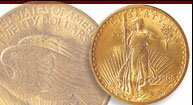
- Huge increase of the gold bullion value of their coins – the $20 Saint-Gaudens gold piece, for example, contains nearly a full ounce of pure gold.
- Massive official melting of the confiscated gold coins. This melting made the limited number of surviving coins in collections much scarcer and more valuable.
These government actions helped President Roosevelt and Congress inflate the U.S. economy during the mid- and late-1930s. These actions also led to a loss of a number of important freedoms for the American people - freedoms from long-term inflation, expanding government, gold confiscation (except collectors), and government intrusion into their private financial matters.
Even more significantly, American citizens lost the substantial benefit of having a dollar as good as gold when Roosevelt took the United States off the gold standard.
Owning gold coins has protected savers from inflation, devaluation, and intrusive government for thousands of years. The events of the 1930s and the decades that followed prove the importance of owning scarce and desirable gold coins.
For protection and potential profit, wise Americans keep a portion of their long-term savings in the form of scarce and desirable coins.
|
 -->
-->